Shopping for St. Croix River property in Hudson? The shoreline under your feet can shape everything from daily enjoyment to long-term costs. You want clear access, stable banks, and confidence about what you can and cannot do in the future. In this guide, you will learn the main shoreline types near Hudson, what each means for value and maintenance, and the key permits and checks to complete before you buy. Let’s dive in.
Why shoreline type matters in Hudson
The St. Croix near Hudson blends natural banks, backwaters, islands, and developed stretches within the federally protected St. Croix National Scenic Riverway. River levels change with seasons and weather, and boat wakes can influence erosion and access. Counties and cities apply Wisconsin’s shoreland rules, and some segments have additional conservation priorities. That means the same river view can come with very different rights, responsibilities, and costs depending on the shoreline type.
Shoreland zoning in Wisconsin regulates building setbacks, vegetation, lot coverage, and work near the water. Start by reviewing state guidance on Wisconsin shoreland zoning standards and plan to verify parcel-specific rules with St. Croix County and the City of Hudson. If you anticipate any shoreline work or a new dock, check the Wisconsin DNR Waterways program to understand permits that may apply.
Shoreline types on the St. Croix
Natural, vegetated banks
These banks have native trees, shrubs, and groundcover down to the waterline or just above it. Root systems help stabilize soil and filter runoff, which supports water quality and habitat. You often get privacy and a scenic, low-maintenance setting.
Buyer tips:
- Confirm if a conservation easement or buffer rules protect the vegetation.
- If you want lawn to the water, check local vegetation management rules before removing native plants.
- Inspect for undercut banks or exposed roots that signal active erosion.
Ask the seller for any past stabilization work, restoration grants, or maintenance records.
Gentle, beach-like shores
These areas feature sand or fine gravel with gradual access to the water. They can be great for swimming, wading, and launching small watercraft. The tradeoff is that beaches on rivers shift with storms and high flows.
Buyer tips:
- Expect periodic regrading or replenishment after major water events.
- Confirm exact private property limits versus public access near the waterline.
- Check for shallow, silty areas or invasive species that could limit safe swimming.
Request notes on seasonal beach width, soil consistency, and any past nourishment.
Riprap or engineered retaining walls
Rock revetments or poured walls are designed to protect banks from erosion and wake action. When engineered and maintained, they can offer strong protection for upland structures. Over time, older walls can fail and repairs may be expensive.
Buyer tips:
- Verify permits for installation or repair and ask for contractor details.
- Inspect for settling, gaps, or undermining behind the structure.
- Ask about any downstream or neighboring erosion concerns and how they were addressed.
Gather permits, engineer reports if available, and the last repair date.
Low-lying marsh or backwater wetlands
These shorelines sit in floodplain areas with cattails, bulrush, and seasonally inundated soils. They offer scenic habitat, flood storage, and filtration benefits. They can also limit where you can place structures, docks, or even yards.
Buyer tips:
- Wetlands are regulated and often require multiple permits for any alteration.
- Wet soils can affect septic placement and foundation options.
- Flood-prone locations can impact insurance, financing, and usable yard space.
Order a wetland delineation, review FEMA flood status, and confirm septic suitability and soil tests.
Bluff or steep bank shores
Bluffs provide elevated views and distance from nuisance flooding at the home site. Stability is the key concern, since steep slopes can slump under certain conditions. Access to the water may require stairs or easements.
Buyer tips:
- Get a geotechnical or bluff stability assessment.
- Verify top-of-bluff setbacks for any future projects.
- Review any history of slides or stabilization work.
Confirm permit history and restrictions before planning improvements.
Developed or urbanized shorelines
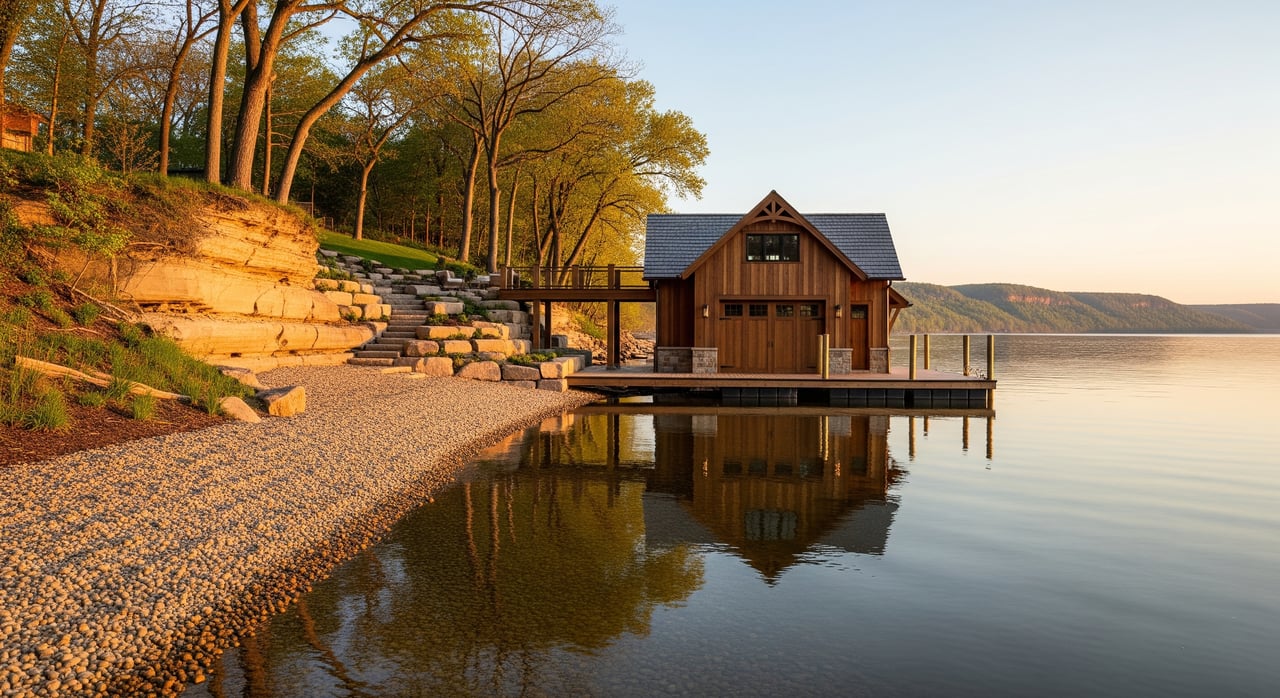
You will find vertical bulkheads, paved banks, private docks, and nearby roads in more built-up stretches. Access is often convenient and amenities may already be in place. The focus becomes condition, lifespan, and potential replacement costs of structures.
Buyer tips:
- Inspect docks, tie-backs, and bulkheads for wear and structural issues.
- Ask for maintenance logs and as-built drawings.
- Consider urban runoff and wake effects from nearby boat traffic.
Budget for future repair or replacement and confirm permit pathways.
Permits, zoning, and property rights
Shoreland zoning is enforced locally using state standards. Setbacks, vegetation rules, and impervious limits vary, and municipalities can be more restrictive. Review state-level guidance, then verify specifics with St. Croix County and the City of Hudson for the exact parcel.
- Ordinary High-Water Mark and navigability. The OHWM helps define public trust boundaries. On navigable waters, the water is public, while private ownership typically extends to the OHWM. A current survey is essential, since OHWM lines can shift over time.
- Permits for shoreline work. Structural work such as riprap, retaining walls, dredging, filling, or wetland impacts often requires permits. Start with the Wisconsin DNR Waterways program and contact St. Croix County zoning for local requirements.
- Floodplain rules and insurance. Many riverfront parcels lie in mapped flood zones. Check the FEMA Flood Map Service Center for the property’s flood zone and ask for any Elevation Certificates.
- Easements and riparian rights. Some properties have conservation easements or shared access recorded in title. Confirm dock rights and any recorded rights-of-way in a title search.
Risks and maintenance to expect
- Erosion and bank retreat. High flows, boat wakes, vegetation loss, and poor drainage can accelerate erosion. Responses range from native plant buffers and drainage fixes to engineered solutions like toe protection and riprap. Bioengineering methods that use live plants and natural materials are often encouraged.
- Ice and winter stress. Ice can damage docks and armor. Removable or seasonal docks, plus a clear winterization plan, help protect your investment.
- Invasive species and water quality. Zebra mussels and invasive plants can affect nearshore use and maintenance. Review Wisconsin DNR aquatic invasive species guidance and follow cleaning and stewardship best practices.
- Septic and wastewater. Shoreline soils and setbacks can limit septic options. Check permit history, inspection records, and soil borings, and confirm potential municipal sewer connections if relevant.
Buyer due-diligence checklist
Use this list to stay organized before you write an offer or during contingencies:
- Recent survey showing property lines, structures, and the OHWM.
- Copies of shoreline permits, as-built drawings, and maintenance records for docks, walls, or riprap.
- St. Croix County shoreland and floodplain zoning information, plus any City of Hudson rules.
- FEMA flood zone, recent flood history, and any Elevation Certificates. Obtain flood insurance quotes early if applicable.
- Geotechnical or bluff stability report for steep banks or visible cracks, slumps, or lean.
- Septic permit history, the latest compliance inspection, and soil test results.
- Title search for conservation easements, shared access, or deed restrictions. Confirm dock rights and any association documents.
- Historic aerials or photos that show shoreline changes over time.
- Contacts and file numbers from county or DNR staff for any past permits or enforcement.
- Contractor estimates for needed repairs or upgrades to riprap, docks, stairs, or plantings.
Local contacts for clarity
When you narrow your search to a specific parcel, call early and document every answer:
- St. Croix County Land and Water Conservation and Zoning for shoreland and floodplain rules.
- City of Hudson Planning and Zoning if the property is within city limits.
- Wisconsin Department of Natural Resources for shoreland zoning and permits. Start at the Wisconsin DNR Waterways program.
- National Park Service staff for properties within the St. Croix National Scenic Riverway.
- FEMA resources for flood maps via the FEMA Flood Map Service Center.
- Qualified local pros such as a surveyor, shoreline contractor or engineer, a geotechnical consultant for bluffs, and a local real estate attorney or title company.
Next steps
Choosing the right shoreline match for your lifestyle and risk tolerance helps you protect your time and money. With the right due diligence, you can enjoy the St. Croix while planning smart improvements and long-term care. If you want help evaluating shoreline types, permits, and value impacts across Hudson and the St. Croix Valley, we are ready to guide you.
For thoughtful, high-touch representation on the river, connect with the Platinum Real Estate Team. We pair local expertise with a boutique, luxury-caliber process to get you to a confident closing.
FAQs
How do Hudson buyers verify what they can build on a St. Croix shoreline?
- Start with the county’s shoreland zoning, then confirm permits through the Wisconsin DNR Waterways program, and keep records of all approvals.
What is the Ordinary High-Water Mark on the St. Croix and why does it matter?
- The OHWM helps define public trust boundaries and where shoreland rules apply, so obtain a current survey that identifies the OHWM on the parcel.
Do St. Croix River properties near Hudson require flood insurance?
- Many do if located in mapped flood zones, so check the FEMA Flood Map Service Center and get quotes early in your process.
Are beach-like shorelines on the St. Croix stable year to year?
- River beaches can shift after storms or high flows, so plan for periodic regrading and verify historic seasonal changes with the seller.
What permits apply to riprap or retaining wall repairs on the St. Croix?
- Structural shoreline work typically needs permits; verify requirements with St. Croix County and review state guidance through the Wisconsin DNR Waterways program.