Why can two Hudson homes on the water be millions of dollars apart? If you have toured St. Croix River estates and then scrolled past “waterfront” condos or small-lake listings, you have felt the gap. You want a clear way to size up value without guesswork. In this guide, you’ll learn the specific factors that move prices in Hudson, what to verify before you write an offer or list your home, and how local rules shape what you can do with the shoreline. Let’s dive in.
Define “waterfront” in Hudson first
“Waterfront” in Hudson is not one market. It can mean a St. Croix River estate with a private dock, a Lake Mallalieu home, a condo with river views, or a house on a small lake or pond. That mix creates big price swings.
To see the range, look at dated snapshots. As of March 2, 2026, one major portal’s Hudson “waterfront” search showed about 15 active listings with a median list price near 529,000 dollars. In mid‑March 2026, other portals showed several St. Croix River properties listed at 2 million dollars or more. The difference is mostly about the waterbody, frontage, and in‑water rights, not just house size.
Market snapshots change fast. Use them as examples, not guarantees. Always filter by the same waterbody and features when you compare values.
Seven value drivers that set price
1) Shoreline type and frontage
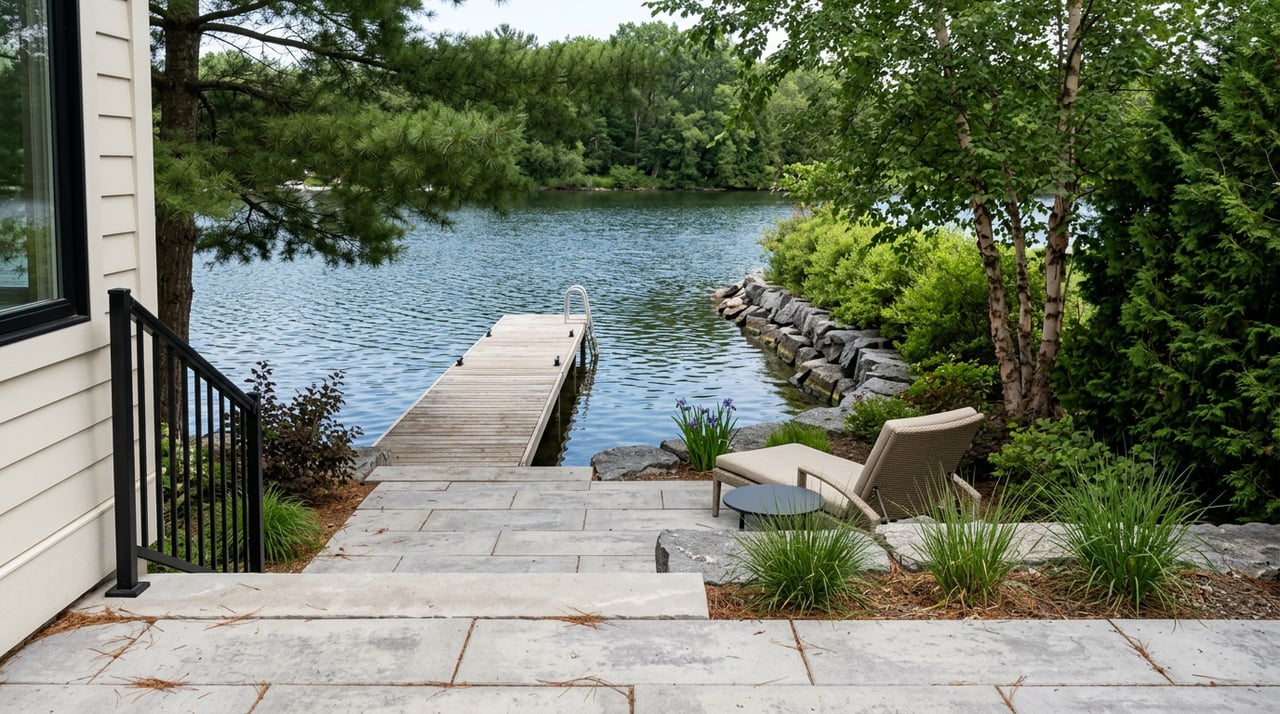
Continuous, usable shoreline supports a premium. Gentle slopes, broad frontage, and stable shore protection make docks easier, improve boat maneuvering, and expand usable yard space. Steep bluffs or narrow drops can compress value.
Hudson’s St. Croix Riverway rules and St. Croix County shoreland standards set setbacks and bluff protections that affect what you can add or rebuild. Review the City’s riverway chapter for setback and slope controls in the River Town Management Zone and Rural Residential areas in Chapter 252. Countywide shoreland distances and standards are in Chapter 16.
What to check:
- Measured shore frontage in feet and the lot’s slope/topography.
- Condition of any seawall or riprap.
- Whether the site is a permitted pier or dock location given the bluffline and Ordinary High Water Mark.
2) Views and orientation
A wide, unobstructed view across the St. Croix or an open lake basin typically commands a premium. Views blocked by vegetation, public docks, or later-built neighbors can reduce value. Hudson’s riverway rules were written to protect scenic character, which can also limit new visual obstructions. See the City’s standards in Chapter 252.
3) Boat access, mooring, and dock rights
Direct, legal, and usable boat access is a major driver. Private piers or moorings with adequate water depth and navigation clearance are worth more than “near the water” homes without practical docking.
In Wisconsin, structures below the Ordinary High Water Mark fall under DNR review. Counties and cities regulate work above that line. Always confirm permit status for any existing dock or lift. Review the DNR’s OHWM guidance on how the boundary is determined. Also note Hudson’s public investments, like the expanded Lakefront Boat Launch and transient docking project, which can influence boating convenience and visitor traffic. You can read the City’s update on lakefront and wharf improvements.
4) Home condition and usable floor area
Waterfront premiums show up most when the house and improvements are functional and permitted. Solid foundations, finished space that counts, updated systems, and maintained shoreline infrastructure support top dollar. Deferred maintenance, failing septic systems, or shoreline repairs can erase value fast. Local riverway standards also limit how far structures can be expanded toward the water, which affects replacement cost and renovation scope. See Hudson’s riverway rules in Chapter 252.
5) Privacy, vegetation, and buffers
Mature trees and intact natural shoreline offer privacy and water-quality benefits. Wisconsin’s minimum shoreland standards require vegetative buffers and limit removal in the first 35 feet from the water, with narrow viewing corridors rather than broad clearing. These rules protect resources and may limit how much “open lawn to the water” you can create. Review state buffer requirements in NR 115 and local implementations in St. Croix County Chapter 16.
6) Flood risk, insurance, and water-level swings
Riverfront lots face regional flood events and river-stage changes. If a property sits in a mapped floodplain, lenders may require flood insurance, which affects monthly costs and buyer demand. An Elevation Certificate can clarify risk and premiums. Start with FEMA’s tools on knowing your flood risk and review Hudson’s comprehensive plan for local flood context in this document.
7) Proximity to downtown and commute access
Walkability to the riverfront boardwalk, restaurants, and parks often trades at a premium. Hudson’s convenient access to the Twin Cities also boosts demand. The City notes roughly 24 to 33 minutes by car to St. Paul or Minneapolis, depending on route and traffic. Downtown river amenities, including the transient wharf project, can also increase visitor interest. See the City’s plan and transportation context in the comprehensive plan and the wharf update here.
Rules that shape what you can build
Lower St. Croix Riverway overlay
The Lower St. Croix is part of a National Scenic Riverway managed by federal and state agencies. This status triggers an overlay with stricter standards designed to protect scenic character. Learn about the riverway on the National Park Service page for the Lower St. Croix, then review Hudson’s local implementation in Chapter 252.
City and county shoreland controls
Hudson’s riverway chapter sets setbacks, slope preservation zones, structure heights, and criteria for erosion control. St. Croix County’s shoreland overlay defines shoreland distances and standards for boathouses, buffers, access corridors, and stairs, and it outlines permits and affidavits for certain shoreline work. These rules directly affect design, cost, and timelines. See the City’s rules in Chapter 252 and the County’s in Chapter 16.
State minimums: NR 115 and NR 118
Wisconsin’s statewide shoreland code sets baseline rules for setbacks, buffers, and impervious surfaces. For the Lower St. Croix, additional NR 118 standards apply to protect scenic values. Anyone planning shoreline work must account for these state rules along with local standards and DNR permits where needed. Review the state framework in NR 115 and the DNR’s shoreland zoning program overview.
Riparian rights and the OHWM boundary
Riparian owners enjoy use rights, but the State holds submerged lands in trust for the public up to the Ordinary High Water Mark. Disputes about pier locations, boathouses, or the exact OHWM line are common and sometimes need DNR or court decisions. For buyers, a survey that shows the OHWM and a written summary of permitted in‑water structures is critical. For context, read this Wisconsin Lawyer overview of riparian rights and disputes and the DNR’s OHWM guide on how the line is set.
A simple, apples-to-apples framework
Use this three-step process to compare value with confidence:
- Define the waterbody and product type.
- Identify whether you are evaluating St. Croix River frontage, Lake Mallalieu, or another lake or pond. For quick background on Mallalieu, see Lake Mallalieu. Compare only within the same waterbody and similar frontage.
- Confirm legal and permit status.
- Gather dock, lift, and shoreline permits; check for recorded easements or shared access. Review local standards in St. Croix County’s shoreland overlay and Hudson’s riverway rules in Chapter 252. If the OHWM is unclear, consult the DNR’s OHWM guidance.
- Line up true comps.
- Match properties with similar frontage, shore type, in‑water rights, views, and renovation potential. Dated portal snapshots help set context, but rely on current MLS data and professional analysis for offers or list pricing.
Buyer and seller due diligence checklists
Here are the practical items to verify before you buy or list:
- Confirm the exact waterbody referenced by the listing and how “waterfront” is defined. Use municipal or county maps and the WDNR surface-water viewer. For quick context on Mallalieu, see Lake Mallalieu.
- Ask for an OHWM determination or a shoreline survey. If none exists, consider the DNR Waterway Determination service or a licensed surveyor. Start with the DNR’s OHWM guidance.
- Request permit history for piers, lifts, boathouses, and shore protection. Review local records under St. Croix County Chapter 16 and Hudson’s riverway chapter.
- Check FEMA flood maps. If in or near a Special Flood Hazard Area, obtain an Elevation Certificate and discuss insurance premiums with an agent. Begin with FEMA’s page on knowing your flood risk.
- Verify septic or well condition and whether municipal sewer is available. Hudson’s utility planning context appears in the City’s comprehensive plan.
- Clarify riparian and bed ownership questions and check for any litigation history. This Wisconsin Lawyer article explains common dispute areas.
- Sellers should gather surveys, septic records, permit files, and clear language about private versus shared waterfront rights. Avoid promising renovations that touch the OHWM or slope preservation zones until permits are in hand. Reference Hudson’s standards in Chapter 252.
How proximity to downtown can shift demand
Hudson’s riverfront parks, restaurants, and boardwalk appeal to buyers who value walkability and quick access to amenities. That convenience can offset the desire for more acreage. Easy car access to St. Paul and Minneapolis, often in the 24 to 33 minute range depending on route and traffic, also draws Twin Cities commuters. Read more in the City’s comprehensive plan and the lakefront wharf update here.
Pricing tiers to expect from recent snapshots
If you want one rule of thumb: premium St. Croix River estates with broad frontage, unobstructed views, and private, permitted docks tend to sit in the multi‑million‑dollar tier. Properties that are water-adjacent, offer limited frontage, or have uncertain or shared access trade much lower.
To illustrate with dated examples, a March 2, 2026 portal snapshot showed a median near 529,000 dollars across a mixed Hudson “waterfront” set that included condos and small-lake homes. In mid‑March 2026, separate searches highlighted multiple St. Croix Riverfront listings at 2 million dollars or more. These figures shift quickly, but they show how the definition of “waterfront” drives price as much as square footage.
When you are ready to price your sale or target a purchase, get current, apples-to-apples comps filtered to the same waterbody, frontage, and in‑water rights.
Ready to talk through frontage, docks, and the right pricing strategy for your home? Connect with the Platinum Real Estate Team for a calm, clear plan and premium marketing that showcases your property’s best story. Request Your Complimentary Home Valuation.
FAQs
What does “waterfront” mean in Hudson and why does it matter?
- It can mean St. Croix River frontage, Lake Mallalieu, a small lake or pond, or a condo with views, and that definition drives big price differences because access, frontage, and in‑water rights vary.
How do Lower St. Croix Riverway rules affect remodeling?
- The scenic riverway overlay and Hudson’s Chapter 252 set strict setbacks, slope protections, and erosion controls, so you must confirm what is allowed before planning decks, stairs, or expansions.
What should I verify about docks and the OHWM in Wisconsin?
- Confirm the dock’s permits and ask for an OHWM determination or survey, since the DNR regulates in‑water structures below that line and counties regulate work above it.
How does flood risk change financing for riverfront homes?
- If a property lies in a mapped floodplain, lenders may require flood insurance, and an Elevation Certificate helps define premiums and loan options.
Does proximity to downtown Hudson and the Twin Cities affect value?
- Yes; walkability to riverfront amenities and a 24 to 33 minute drive to St. Paul or Minneapolis often boost demand for well-located riverfront homes.
What documents should a seller gather before listing a lakefront property?
- Collect surveys, septic reports, shoreline and dock permits, and any easements or access agreements to shorten due diligence and support stronger pricing.