Thinking about buying a piece of land in Somerset so you can build your next home from the ground up? It is an exciting move, but the details can feel complex if you have not done it before. In this guide, you will learn how zoning, utilities, septic, surveys, permits, costs, and timelines work in Somerset and greater St. Croix County. By the end, you will know the key checks to run before you make an offer. Let’s dive in.
Buildable lot basics in Somerset
Before you fall in love with a parcel, confirm that it can legally become a buildable lot. St. Croix County’s land division rules require a recorded survey map to create new lots, and the county’s general minimum lot size is 1.5 acres unless local rules require more. Review the process and standards in the county’s land division guidance. If the seller only has a sketch, plan on a Real Property Surveyor preparing a Certified Survey Map (CSM) and getting approvals before permits are issued.
Mapped overlay districts can also control what you can build. Shoreland, floodplain, and the Lower St. Croix Riverway overlays often set stricter setbacks, impervious limits, and vegetation rules. You can view a parcel’s zoning and overlay status on the county’s interactive GIS and parcel tools and review the county’s Shoreland Overlay code for details.
Village vs. rural utilities
Your utility setup depends on location. Inside the Village of Somerset, municipal water and sewer may be available, and the Village lists local providers for power, gas, and internet. Start with the Village’s utility service providers page to confirm availability and connection policies.
Outside the Village, plan for a private well and a private onsite wastewater treatment system, often called POWTS or a septic system. Whether sewer is available is a decisive feasibility check, so verify the parcel’s location against municipal boundaries on the county GIS and parcel tools early.
Private wells: what to expect
Wisconsin requires licensed well drillers and a DNR notification before construction. The DNR outlines standards and licensing on its drinking water and wells page. For budgeting, a complete residential well system in Wisconsin commonly ranges around 7,000 to 15,000 dollars, depending on depth and geology, as summarized in this Wisconsin well cost guide. Always get local quotes because subsurface conditions vary.
Septic systems and soil tests
If your lot is not on public sewer, you will need a soil and site evaluation by a Certified Soil Tester. The county uses this report to size and type your POWTS and issues a sanitary permit, which is usually required before the building permit. St. Croix County’s sanitary program and groundwater report explain the role of soils and water table in system choice and maintenance schedules. Review the county’s POWTS and groundwater background. Shallow soils, high groundwater, or wetlands can require alternative systems like mounds or at-grade systems, which increase cost.
Surveys, access, and easements
Survey and CSM essentials
To create or adjust a lot, you need a licensed surveyor to prepare a boundary survey and, if dividing 1 to 4 lots, a CSM. The town reviews the preliminary map first, then the county completes its review and records the final CSM. The county notes a modest recording fee for the final map. Learn the steps in the county land division process.
Driveway permits and road access
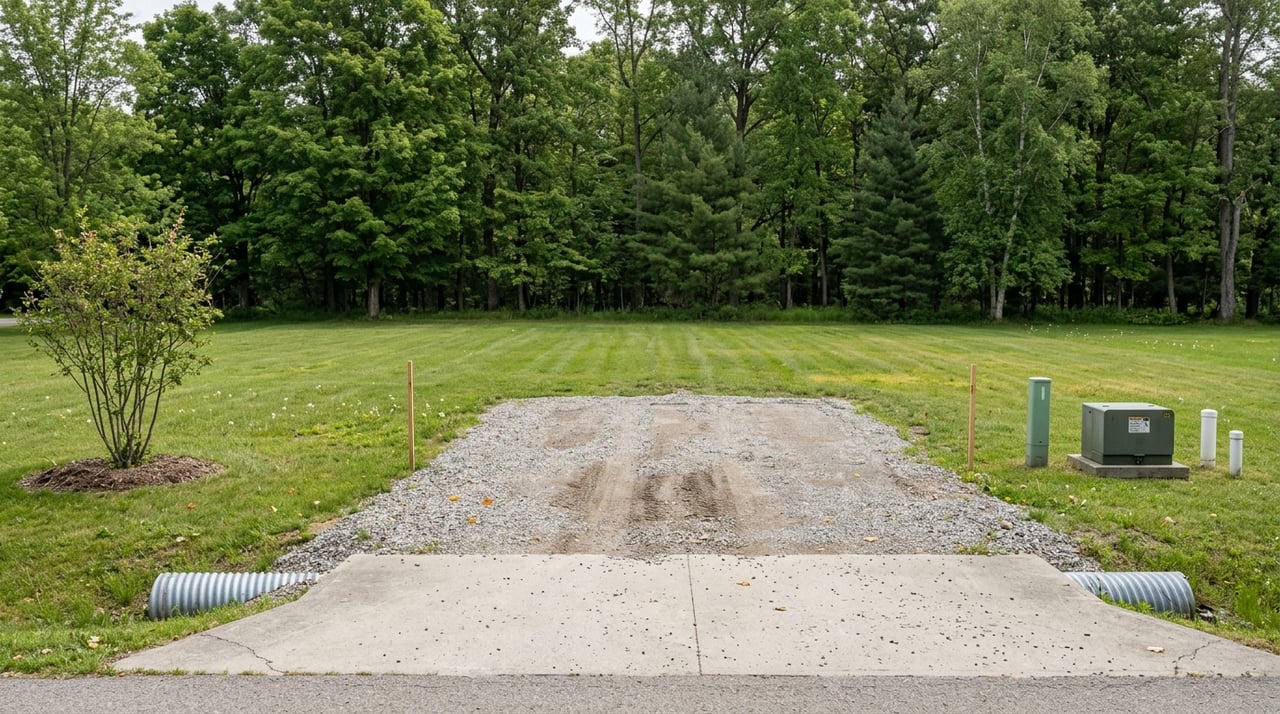
A driveway permit is often required and the issuing authority depends on whether the driveway connects to a town or county road. The Town of Somerset provides the application and fee details in its FAQ. Local building inspectors also include a driveway permit as part of the new dwelling checklist, which you can see in the All Croix Inspections new-homes guidance.
Easements and title restrictions
Utility, drainage, or access easements and private covenants can limit where you build or even whether you can build at all. Always review the recorded deed, plat or CSM notes, and any covenants. You can confirm recorded documents through the county’s Register of Deeds resources, starting with this Register of Deeds reference.
Permits and a typical timeline
Here is a common sequence if you plan to build:
- Do initial research using the county GIS and parcel tools. Call St. Croix County Community Development to confirm zoning and overlay status, and check whether municipal utilities are available.
- Hire a surveyor if the lot is not already a recorded buildable lot. If you are creating new lots, submit a CSM to the town, then the county, following the land division process.
- For unsewered lots, schedule a soil and site evaluation with a Certified Soil Tester and plan septic type and location using the county’s POWTS guidance.
- Apply for a driveway permit with the town or county. See the Town’s FAQ for local steps.
- Have a licensed plumber submit the sanitary (POWTS) permit to the county once soils are confirmed.
- Submit your building permit packet to the local inspector. The All Croix Inspections checklist shows typical requirements and notes that review often takes about 10 business days once the packet is complete.
Approximate timing, assuming a straightforward site:
- Feasibility calls and GIS checks: a few days to 2 weeks.
- Soil test and report: 1 to 3 weeks for scheduling and results.
- CSM town and county review: about 4 to 8 weeks in routine cases.
- Sanitary permit review and installation: several weeks, depending on system.
- Building permit review: often about 10 business days once complete, then your build timeline depends on design and contractor availability.
Budget and cost drivers
Plan for these common items when you price a lot and your build:
- Surveying and CSM fees. Costs vary by parcel size and complexity. The county records the final CSM and charges a small recording fee. See the land division guidance.
- Driveway permits and culvert installation. The Town’s FAQ outlines local steps and fees.
- Septic system. A soil and site evaluation is required and is modest compared to installation costs. Alternative systems, such as mound or at-grade, cost more. Review the county’s POWTS background to understand factors.
- Well drilling. Expect a licensed driller and budget roughly 7,000 to 15,000 dollars depending on depth and geology, as summarized in the Wisconsin well cost guide. Confirm regulations with the DNR well guidance.
- Site prep and utilities. Grading, erosion control, tree removal, electric and gas extensions, and driveway work can range from several thousand to tens of thousands depending on distance and scope.
- Construction costs. Lot slopes, rock, soils, and wetlands can increase build costs. Get a site walk and a builder estimate early.
Before you bid: 7 key checks
Use this quick screen to protect your budget and timeline:
- Confirm the lot is already a recorded buildable lot. If not, understand the land division steps and timing.
- Pull the parcel on the county GIS and parcel tools to check zoning and overlays.
- Look for Shoreland, Riverway, or floodplain overlays and review the Shoreland Overlay code.
- Verify municipal sewer and water availability via the Village’s utility providers page. If unsewered, line up a soil and site evaluation.
- Confirm legal access, driveway permit requirements, and any culvert work through the Town’s FAQ.
- Review recorded deeds, easements, and covenants through the Register of Deeds reference.
- Get preliminary quotes for well, septic, driveway, grading, and utility connections so your offer reflects real costs.
Who to contact first
- St. Croix County Community Development for zoning, overlays, land division, and sanitary permits. Start with the land division page and the GIS and parcel tools.
- Village of Somerset for municipal utility availability and connection questions. See the utility providers page.
- Town of Somerset for driveway permits and town road access. Review the Town FAQ.
- Building inspector for permits and inspections. Check the All Croix Inspections new-homes guidance.
Ready to find the right lot?
If you want a calm, step-by-step path from first showing to building permit, you are in the right place. Our team understands the differences between Village and rural parcels, how overlays affect design, and how to structure smart contingencies with your builder. When you are ready to walk lots and run the right checks, reach out to the Platinum Real Estate Team.
FAQs
What makes a lot “buildable” in Somerset?
- A lot must meet zoning and overlay rules, have legal access, and either sewer service or a permitted POWTS. New lots need a recorded survey map under the county’s land division process.
What is the minimum lot size in St. Croix County?
- The county’s general minimum lot size is 1.5 acres unless local rules require more. Confirm details in the land division guidance and with county staff.
How do I confirm sewer and water in the Village?
- Check if the parcel lies inside Village limits and near mains, then review the Village’s utility providers page for hookups and policies.
What is a POWTS and when is the permit issued?
- A POWTS is a private onsite wastewater treatment system. The county issues a sanitary permit after a Certified Soil Tester completes a soil and site evaluation, as outlined in the county’s POWTS background.
Do I need a driveway permit for a new home?
- Yes, in most cases. The Town or county issues driveway permits depending on the road, and local inspectors require one for a new dwelling. See the Town’s FAQ and All Croix guidance.
How long does the CSM approval take?
- Routine CSM reviews often take about 4 to 8 weeks due to town meeting schedules and county review steps. See the land division process for context.